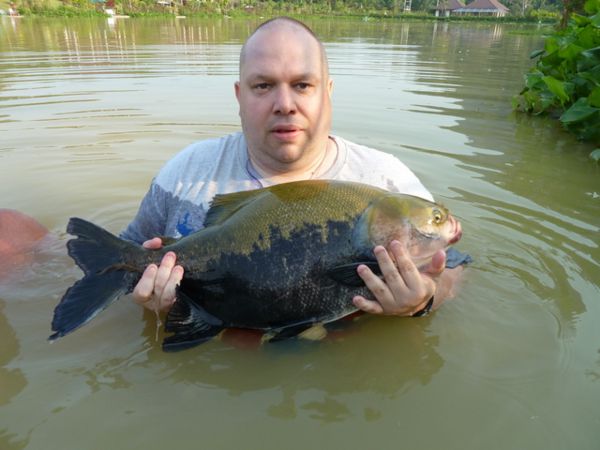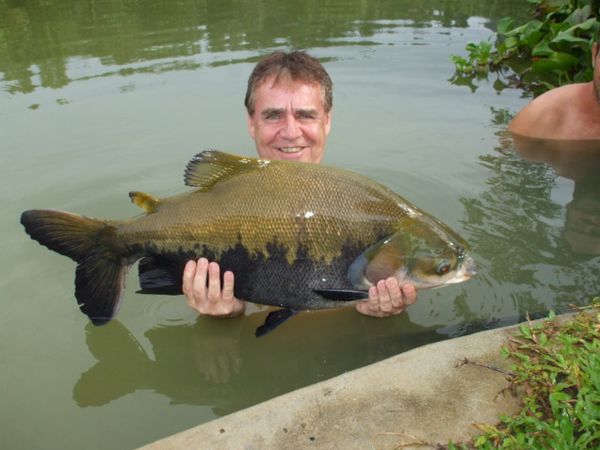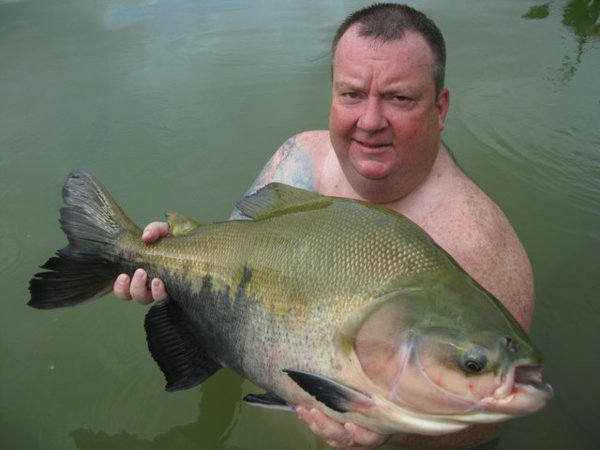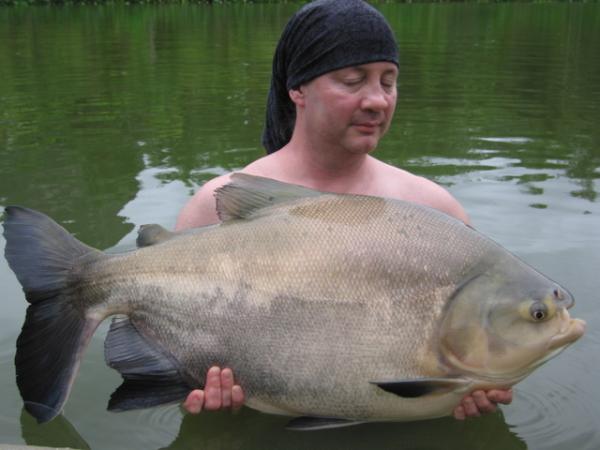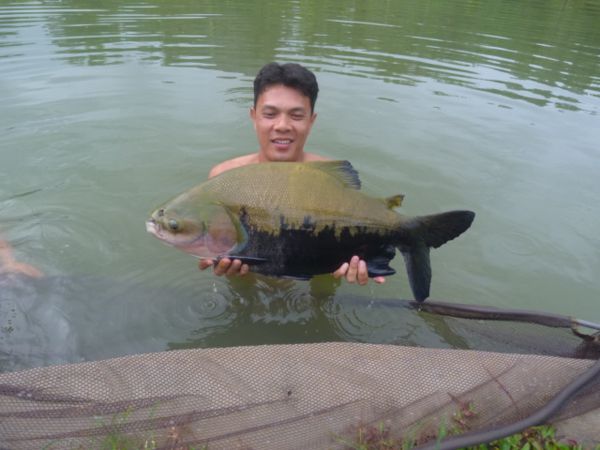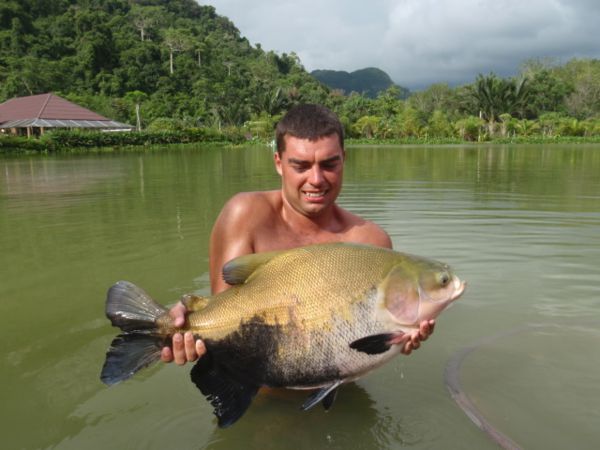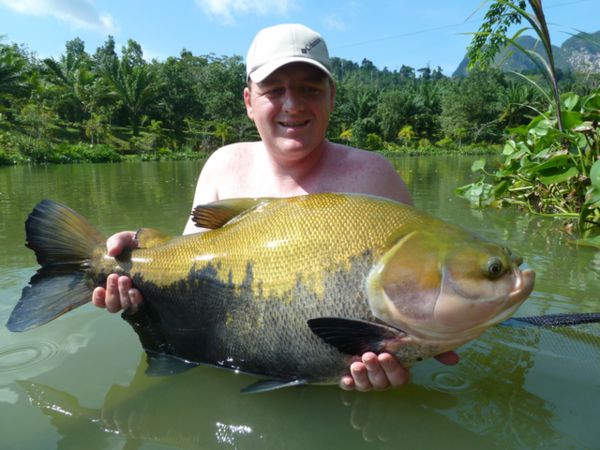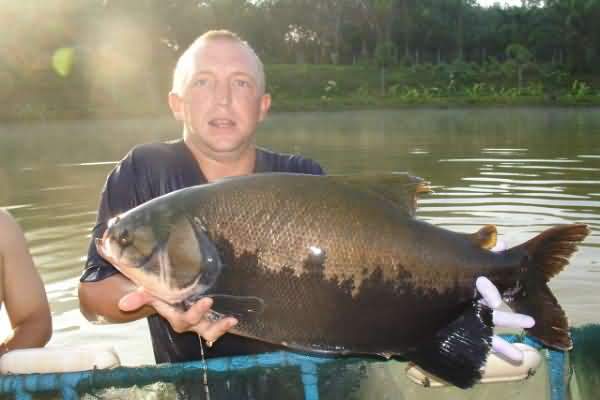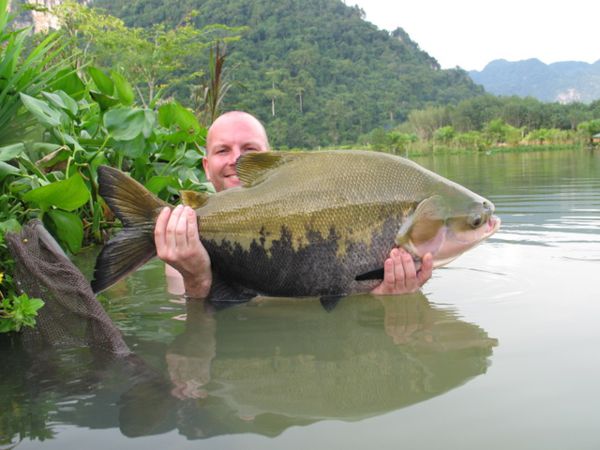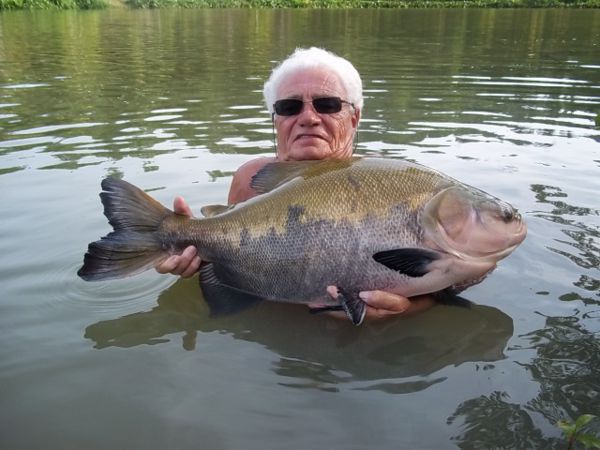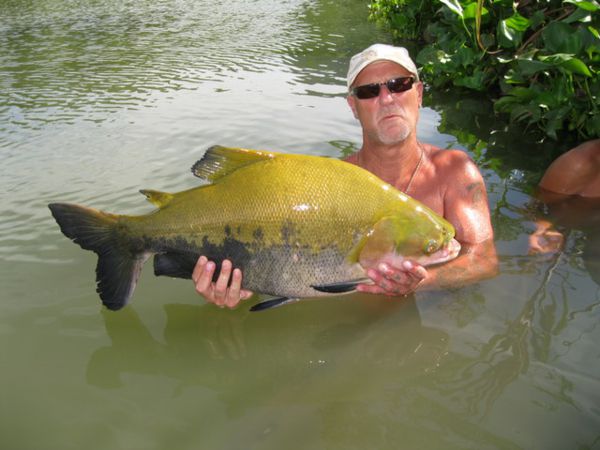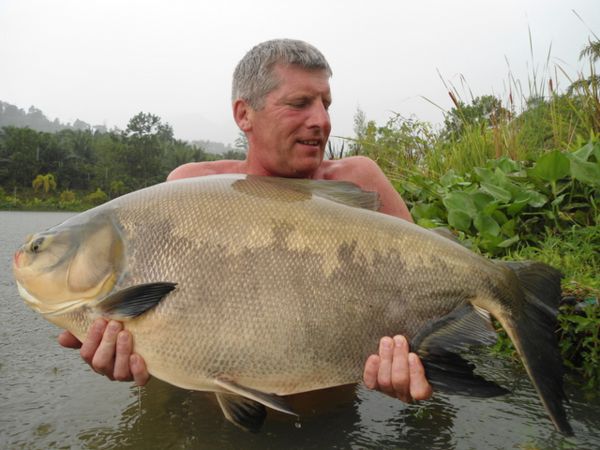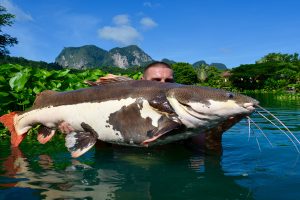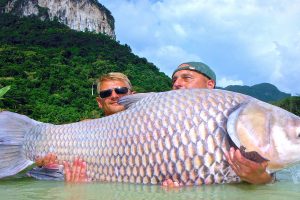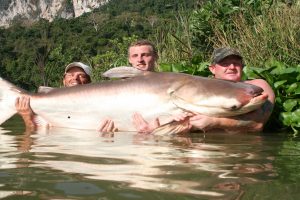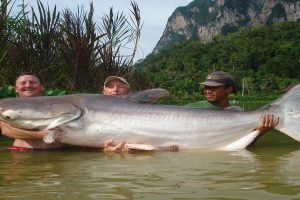
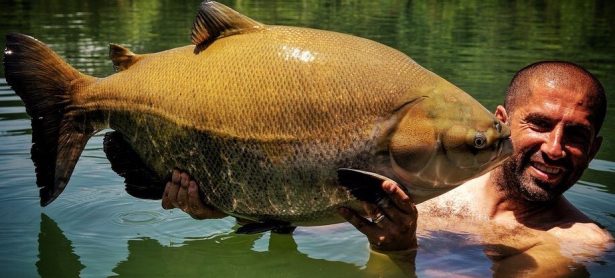
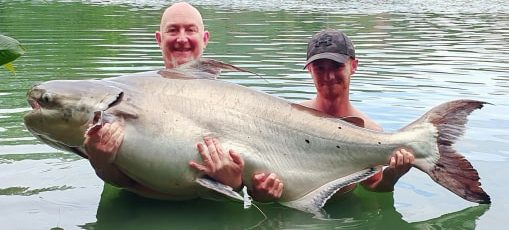
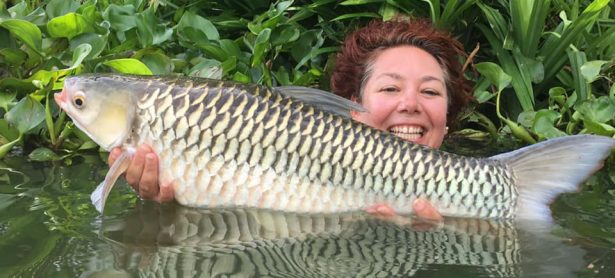
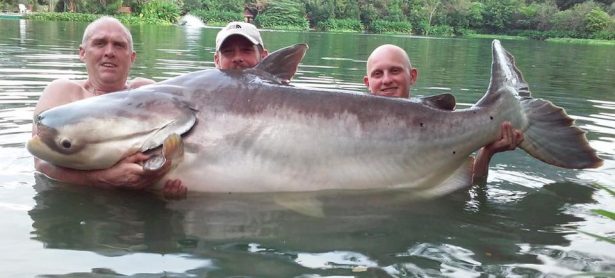
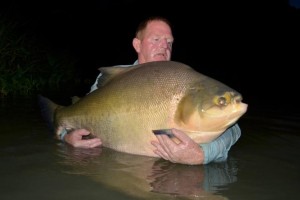
 Name: Tambaqui.
Species: Colossoma macropomum.
Thai name: Pla jermet.
Max length: 1.2m.
Max weight: 40kg.
IGFA record: 32.4kg (71lb 7oz.)
Diet: Fruit, water plants, nuts, insects, shrimp, maize, bread, pellet and boilies.
To fish for our tambaqui, fish the same tactics as you would for their close relation the black pacu. They do have a distinct liking for maize, especially if you soak it in fruit flavourings. As with pacu, float fish alongside the water hyacinth beds, and they occasionally get caught on the plateau tops. The tambaqui is a great fish to target on fly rods using surface bugs and hopper patterns on floating lines. When they take do not strike, but wait for the line to tighten or you will miss them, due to their human like teeth, which they use to crush nuts. These teeth are not sharp, but you must let the fly get past the teeth. You do not need to use wire, but you should use tough braid hooklinks.
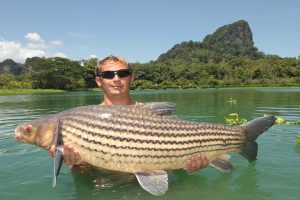
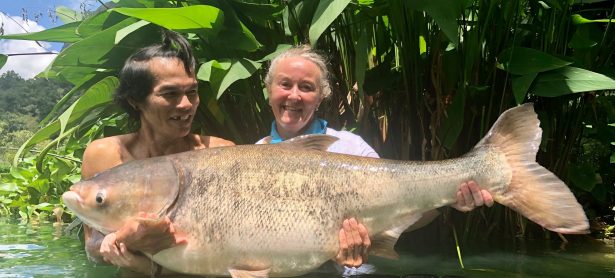
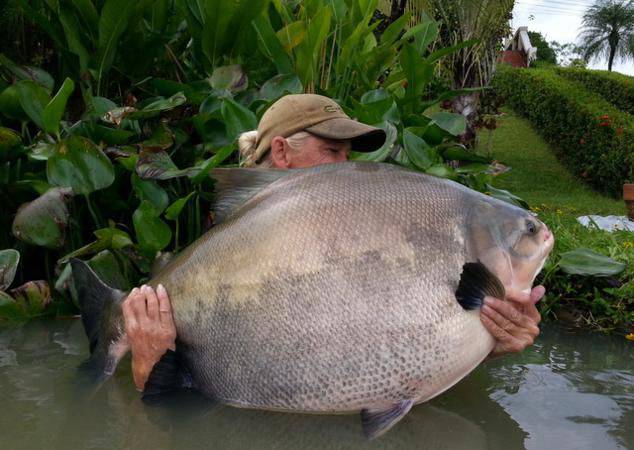
Tambaqui fight as if they are burrowing; they get their heads down and keep diving, constantly changing direction, and when they approach the net they use their body mass to turn in hard circles. This is the stage when they will shed the hook and when most tambaqui are lost. There are no dangers to you or this robust fish when taking your trophy shot, unless you are stupid enough to put your finger in its mouth. The biggest problem when you try to hold this fish for a picture is that they will not keep still, plus there are no big pectoral fins to hold on to. Our guides will hold the landing net beneath your fish to catch them when they slip from your hands, but if the fish keeps slipping from your grasp you will be asked to release without a picture. As always we will not sacrifice a fish for a picture, an our guide’s decision is final.
General facts on tambaqui:
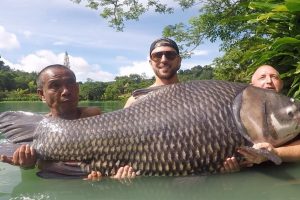
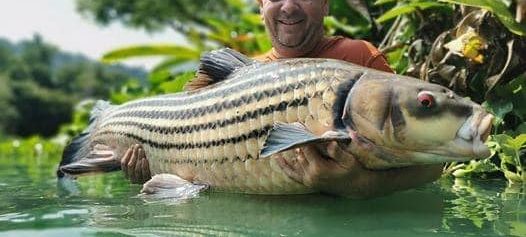
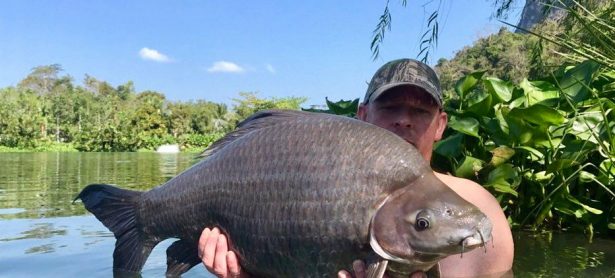
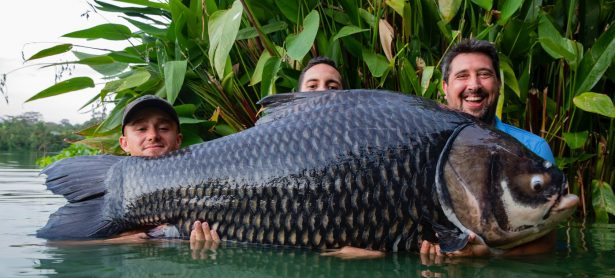
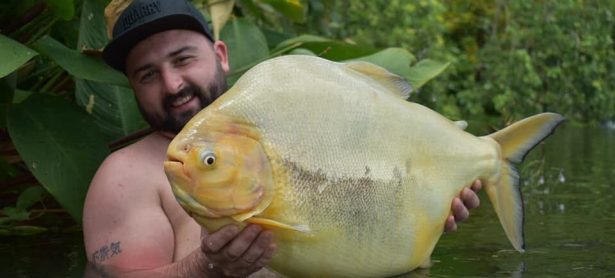
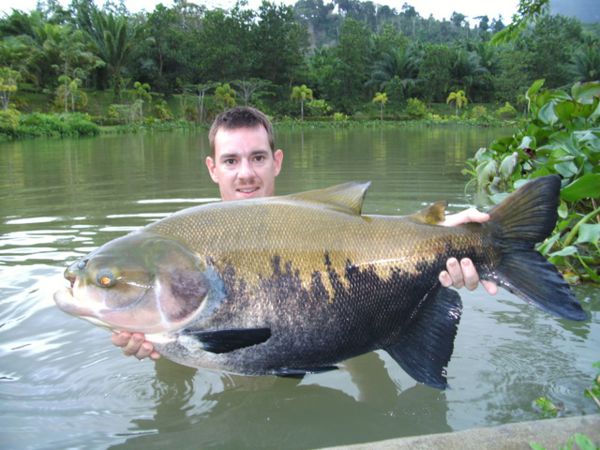
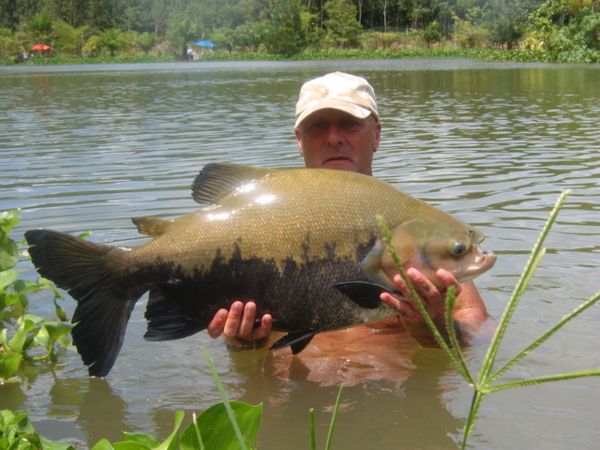
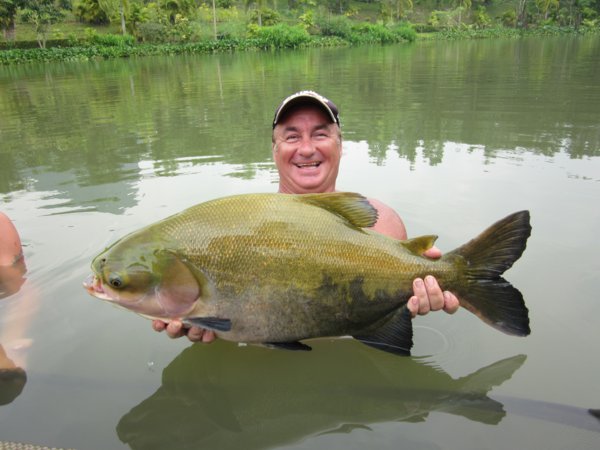
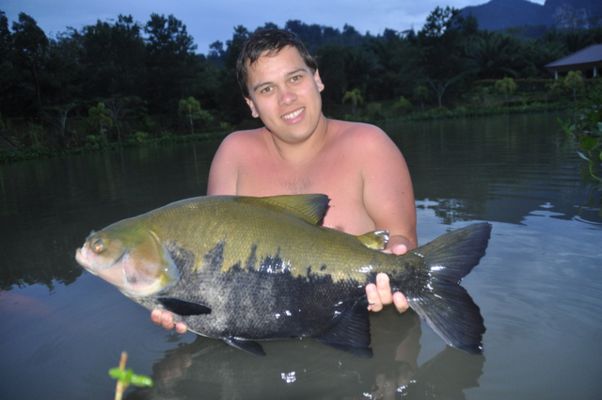
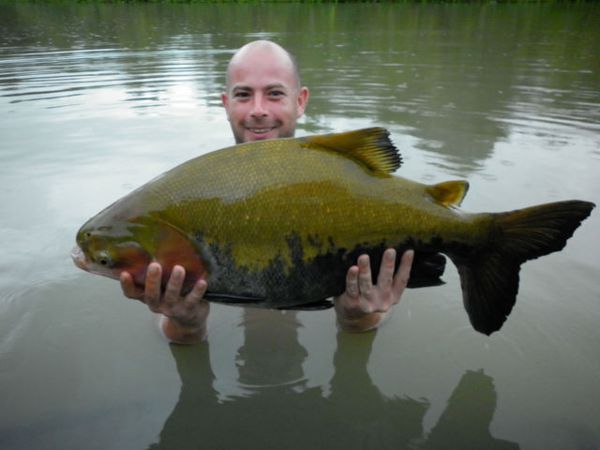
Tambaqui are similar in shape and looks to the piranha; they are a laterally compressed fish, plate-like in shape with large eyes and a slightly arched back. Their upper back is a mottled green with black lower flanks leading to a grey belly. They have very small pectoral fins, plus an adipose fin as in the trout and salmon family. Tambaqui have a very impressive array of dentistry, and although their human-type teeth are quite blunt they can snap your fingers if you are silly enough to put them in their mouth. In the wild they live in rivers, and also river or stream fed lakes; they live under trees and weedbeds seeking out shade and cover, where they feed on falling nuts and fruit.
The tambaqui will only spawn in running water over gravel runs, which rules out any spawning here at Gillhams. The tambaqui originates from South America where it inhabits the Amazon and Orinoco basins. They are a solitary fish; the adults stay in the flooded forests in the rainy season feeding on nuts, fruit and grains along with insects, snails and decaying plants. The fry live in flood plain backwaters feeding on zooplankton until they reach maturity.
The tambaqui is the largest member of the characin family which includes pacu and piranha. The tambaqui, as with many species, found its way to Thailand for the fish farming business as a food fish. They are a popular fish with the Thai fish farmers, as they will tolerate mineral poor waters, plus they are very resistant to diseases. They are fast growing fish, and around 10% of their bodyweight is fat, so they have a very distinct oily taste, which is not liked by the western palette. The Thais deep fry this fish or dry them out to store for use in soups, and they are found fresh or dried in Thai food markets or frozen in the supermarkets.